


Cybersecurity Trends Every American Business Should Know in 2026
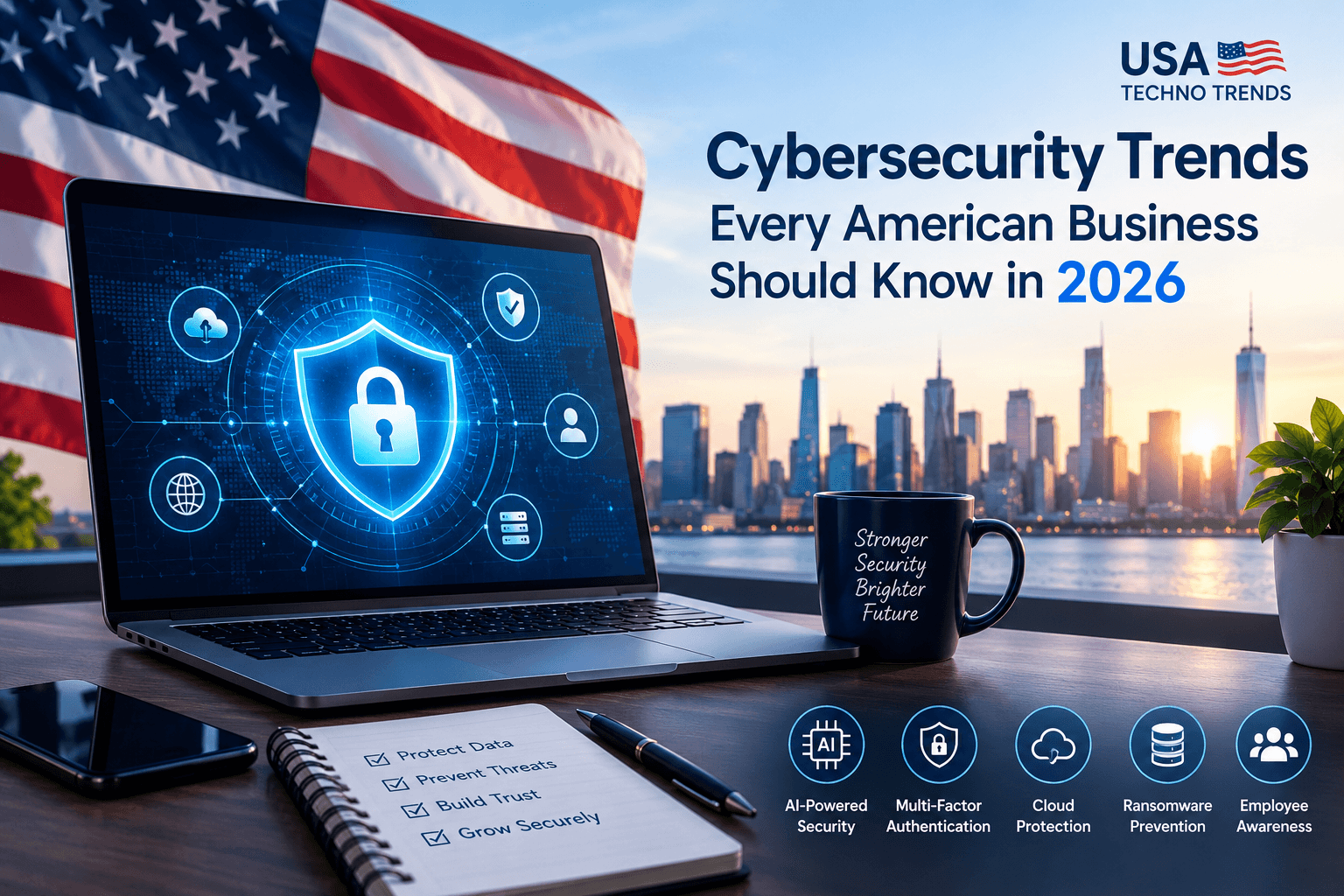
In 2026, cybersecurity has become an essential priority for businesses across the United States. From small startups to large corporations, organizations depend on digital technology to manage customer information, process payments, communicate with employees, and operate their daily activities. However, increasing digital connectivity also creates new opportunities for cybercriminals.
Cyberattacks such as phishing, ransomware, identity theft, and data breaches can interrupt business operations and damage customer trust. As technology continues to evolve, American businesses must understand emerging cybersecurity trends and adopt practical strategies to protect their digital assets.
1. Artificial Intelligence in Cybersecurity
Artificial intelligence (AI) is transforming how businesses identify and respond to cyber threats. AI powered security systems can analyze large amounts of data, recognize unusual activities, and help security teams detect potential attacks more quickly.
However, cybercriminals can also use AI to create convincing phishing emails, imitate trusted individuals, and automate certain attacks. This makes it increasingly important for businesses to combine intelligent security tools with employee awareness and human oversight.
Companies should evaluate AI security solutions carefully, monitor their performance, and establish clear policies for using AI tools safely.
2. Stronger Identity Protection and Multi Factor Authentication
Passwords alone may not provide sufficient protection against modern cyber threats. Stolen credentials, password reuse, and phishing attacks can allow unauthorized users to access business accounts.
Multi factor authentication (MFA) adds another layer of security by requiring users to verify their identity through an additional method. Businesses should enable MFA for email accounts, cloud platforms, financial systems, and administrator accounts.
Where possible, organizations should consider phishing resistant authentication methods, such as passkeys or security keys. Using a password manager and unique passwords for every account can further reduce the risk of unauthorized access.
3. Ransomware Prevention and Data Backups
Ransomware remains a serious concern for organizations that depend on digital information. In these attacks, criminals may encrypt files, disrupt operations, or threaten to expose stolen data unless a payment is made.
Businesses can strengthen their cybersecurity strategies by following the NIST Cybersecurity Framework 2.0, which provides practical guidance for identifying, managing, and reducing cybersecurity risks.
Businesses can reduce their exposure by regularly updating software, restricting unnecessary access, securing remote connections, and training employees to recognize suspicious messages.
Reliable backups are equally important. Organizations should maintain protected copies of critical information, keep backup systems separated from everyday networks where practical, and test restoration procedures regularly. A backup is only useful if the business can successfully recover its data when needed.
4. Cloud Security and Remote Work Protection
Cloud computing and remote work have changed how American companies store information and collaborate. Although cloud services offer flexibility, incorrectly configured permissions, unsecured devices, and compromised accounts can expose sensitive business data.
In 2026, organizations should review cloud access permissions, enable security monitoring, encrypt sensitive information, and remove access when employees change roles or leave the company.
Remote workers should use updated devices, secure internet connections, and approved business applications. Companies should also establish clear rules about storing confidential information and accessing company systems from personal devices.
5. Third Party and Supply Chain Security
Businesses often depend on external software providers, cloud platforms, payment processors, and technology vendors. A security weakness at one provider can create risks for multiple organizations.
Third party risk management is therefore an important cybersecurity priority. Companies should evaluate vendors before sharing sensitive information, understand what systems external providers can access, and review their security practices periodically.
Contracts should clearly explain security responsibilities and incident notification expectations. Businesses should also limit vendor permissions to the information and systems genuinely required for their work.
6. Employee Training and Phishing Awareness
Technology cannot eliminate every cybersecurity risk. Human decisions still play a major role in protecting business information.
Phishing messages may appear to come from managers, banks, delivery companies, or familiar service providers. Employees should learn to identify unusual requests, suspicious attachments, unexpected payment instructions, and links that lead to unfamiliar websites.
Regular awareness sessions and realistic practice exercises can help staff respond confidently. Businesses should encourage employees to report suspicious activity immediately without fear of embarrassment or blame.
7. Preparing for Cybersecurity Incidents
Even businesses with strong security measures can experience cyber incidents. Having a response plan can reduce confusion and help organizations recover more efficiently.
A practical plan should identify responsible team members, explain how to isolate affected systems, establish backup communication methods, and outline procedures for notifying relevant stakeholders. Businesses should also understand applicable legal and contractual reporting requirements.
The National Institute of Standards and Technology (NIST) Cybersecurity Framework 2.0 provides useful guidance for managing cybersecurity risks through six functions: Govern, Identify, Protect, Detect, Respond, and Recover.
Businesses can use this framework to assess their current security practices, identify gaps, and prioritize improvements according to their needs and resources.
Frequently Asked Questions (FAQs)
1. What are the top cybersecurity trends in 2026?
The top cybersecurity trends in 2026 include artificial intelligence powered security, multi factor authentication, ransomware prevention, cloud security, third party risk management, employee awareness training, and improved incident response planning.
2. Why is cybersecurity important for American businesses?
Cybersecurity helps American businesses protect sensitive information, prevent unauthorized access, reduce financial losses, maintain customer trust, and minimize disruptions caused by cyberattacks.
3. How is artificial intelligence changing cybersecurity?
Artificial intelligence helps security teams identify unusual activities, analyze potential threats, and respond to suspicious behavior more efficiently. However, cybercriminals can also use AI to create more convincing phishing messages and automate attacks.
4. What is multi factor authentication (MFA)?
Multi factor authentication is a security method that requires users to verify their identity using two or more types of evidence. It adds an extra layer of protection beyond a password and helps prevent unauthorized account access.
5. How can businesses protect themselves from ransomware attacks?
Businesses can reduce ransomware risks by updating software, using multi factor authentication, training employees to recognize phishing attempts, limiting access to sensitive systems, and maintaining secure, regularly tested data backups.
6. What role does cloud security play in modern businesses?
Cloud security protects business data, applications, and digital infrastructure hosted on cloud platforms. Effective cloud security includes access controls, encryption, continuous monitoring, and regular reviews of security settings.
7. How can small businesses improve their cybersecurity?
Small businesses can improve cybersecurity by using strong, unique passwords, enabling MFA, installing software updates, backing up important data, training employees, and creating a basic cybersecurity incident response plan.
8. What is the NIST Cybersecurity Framework 2.0?
The NIST Cybersecurity Framework 2.0 is a resource that helps organizations manage cybersecurity risks. It organizes cybersecurity activities into six core functions: Govern, Identify, Protect, Detect, Respond, and Recover.
9. Why is employee cybersecurity training important?
Employee training helps workers recognize phishing emails, suspicious links, fraudulent payment requests, and other common threats. Regular awareness training can reduce preventable security mistakes and encourage faster reporting of suspicious activity.
10. What should a business do after discovering a cyberattack?
A business should activate its incident response plan, isolate affected systems where appropriate, contact its security team or service provider, preserve relevant evidence, and restore systems safely. It should also follow applicable notification and reporting requirements.
Conclusion
Cybersecurity in 2026 requires continuous attention rather than a one time investment. Artificial intelligence, stronger authentication, ransomware prevention, cloud protection, vendor security, employee education, and incident response are all important parts of a modern defense strategy.
American businesses do not necessarily need the most expensive technology to begin improving security. They need a clear plan, informed employees, reliable backups, and consistent security practices.
By reviewing risks regularly and investing in practical safeguards, businesses can protect valuable information, strengthen customer confidence, and build a more resilient digital future.

 Turkish