


Declaration of Faith in Islam: Meaning, Importance, and What It Means to Be a Muslim
The Shahada, or declaration of faith, is the foundation of a Muslim’s identity and relationship with Allah. Through this central testimony, My Shahada helps readers explore the meaning of Islam, the beliefs behind its most important declaration, and how these words shape a Muslim’s everyday life.
What Is the Declaration of Faith in Islam?
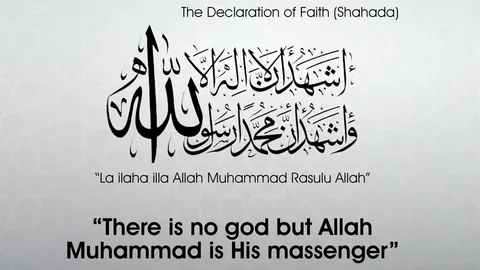
The declaration of faith in Islam is called the Shahada (Shahadah). It is the first of the Five Pillars of Islam and expresses two essential beliefs: that Allah alone is worthy of worship and that Prophet Muhammad (peace be upon him) is His Messenger.
The Shahada is traditionally expressed in Arabic as:
أشهد أن لا إله إلا الله وأشهد أن محمدًا رسول الله
Ash-hadu an la ilaha illa Allah, wa ash-hadu anna Muhammadan rasul Allah.
In English, it means:
“I bear witness that there is no deity worthy of worship except Allah, and I bear witness that Muhammad is the Messenger of Allah.”
These words are brief, but their meaning reaches into every part of a Muslim’s life. They establish the foundation of Islamic belief, guide worship, and remind Muslims that faith involves both sincere conviction and a commitment to living according to Islamic teachings.
Understanding the Two Parts of the Shahada
The Shahada contains two connected testimonies. Each has a distinct meaning, and together they form the foundation of Islamic faith.
The First Testimony: Belief in the Oneness of Allah
La ilaha illa Allah means that there is no deity worthy of worship except Allah.
This statement expresses Tawhid, the belief in the absolute oneness of Allah. Muslims believe that Allah is the Creator, Sustainer, and only One deserving of worship. This belief shapes how Muslims pray, make decisions, express gratitude, and understand their purpose in life.
It also encourages believers to place their trust in Allah, seek His guidance, and remember that worldly possessions, status, and achievements are not more important than their relationship with Him.
The Second Testimony: Belief in Prophet Muhammad (Peace Be Upon Him)
Wa ash-hadu anna Muhammadan rasul Allah means that Muhammad is the Messenger of Allah.
This part of the Shahada confirms a Muslim’s belief in Prophet Muhammad (peace be upon him) and the message he conveyed. Muslims look to his teachings and example, known as the Sunnah, to understand how to practise their faith.
His example provides guidance on prayer, honesty, kindness, patience, family relationships, and the treatment of others. The second testimony therefore connects belief with practice: Muslims affirm the Prophet’s message and seek to follow his guidance in daily life.
Why Is the Declaration of Faith Important to Muslims?
The Shahada is more than a statement that identifies someone as Muslim. It is a lifelong reminder of the beliefs that guide Islamic worship, personal values, and relationships with others.
Its importance can be understood through several aspects of Muslim life:
-
It establishes the foundation of Islam. The Shahada is the first of the Five Pillars and expresses the central beliefs on which the faith rests.
-
It guides worship. Muslims reaffirm its meaning through daily prayers and other acts of worship.
-
It shapes personal conduct. Belief in Allah encourages honesty, accountability, gratitude, and compassion.
-
It provides spiritual direction. The declaration reminds Muslims to seek Allah’s guidance and make choices consistent with their faith.
-
It marks entry into Islam. A person who sincerely accepts the beliefs expressed in the Shahada and declares them enters the Muslim faith.
The significance of the Shahada becomes clearer when it is understood as both a declaration of belief and a commitment to practise that belief. Saying the words is important, but understanding their meaning helps a Muslim appreciate how faith should influence everyday decisions.
What Does It Mean to Be a Muslim After Taking the Shahada?
Taking the Shahada marks the beginning of a Muslim’s journey of faith. It does not mean that a person must know every Islamic teaching immediately or become perfect overnight. Rather, it establishes the foundation from which learning, worship, and personal growth can develop.
For someone who has recently embraced Islam, the journey may involve learning how to perform Salah, understanding the Quran, discovering the Five Pillars, and building a connection with the Muslim community.
For Muslims who have followed the faith since childhood, reflecting on the Shahada can renew their understanding of its meaning and encourage them to practise their beliefs more consciously.
Living by the declaration of faith involves putting its principles into action. This can mean telling the truth even when it is difficult, treating family members with respect, fulfilling responsibilities, helping people in need, and showing patience during challenging times.
It also means recognising that learning is a continuous process. Muslims may grow in knowledge and understanding throughout their lives, returning to the principles of the Shahada whenever they need to reconnect with the purpose of their faith.
How the Shahada Connects Faith With Everyday Life
The declaration of faith is not limited to religious ceremonies or special occasions. Its meaning can influence ordinary moments, from personal decisions to interactions with friends, family, colleagues, and strangers.
A Muslim who remembers the Shahada may approach work with honesty, handle disagreements with patience, and treat others fairly. Belief in Allah encourages accountability, while following the Prophet’s example provides a model for good character and responsible behaviour.
The Shahada also offers a foundation for understanding the other pillars of Islam. Salah strengthens regular worship, Zakat encourages giving and social responsibility, Sawm develops discipline and awareness of others, and Hajj brings Muslims together in a shared act of devotion.
Each pillar expresses a different aspect of Islamic practice, but the declaration of faith provides the foundation connecting them.
For readers exploring Islam for the first time, My Shahada offers a starting point for learning about the beliefs, practices, and values that shape Muslim life. Understanding the Shahada can make the wider teachings of Islam easier to explore, one step at a time.
Conclusion
The declaration of faith in Islam expresses the two central beliefs that define a Muslim’s relationship with Allah and the guidance brought by Prophet Muhammad (peace be upon him). Its importance lies not only in the words themselves but also in the understanding, sincerity, and commitment they represent.
Whether someone is learning about Islam for the first time or reflecting on a faith they have practised for years, the Shahada offers a meaningful place to begin. It reminds Muslims of what they believe, why they worship, and how their faith can shape their actions.
My Shahada encourages readers to explore the meaning behind this essential declaration and continue learning about Islam with understanding, sincerity, and purpose.

 Turkish