


Candle Packaging Ideas That Protect Your Wax and Win Over Buyers
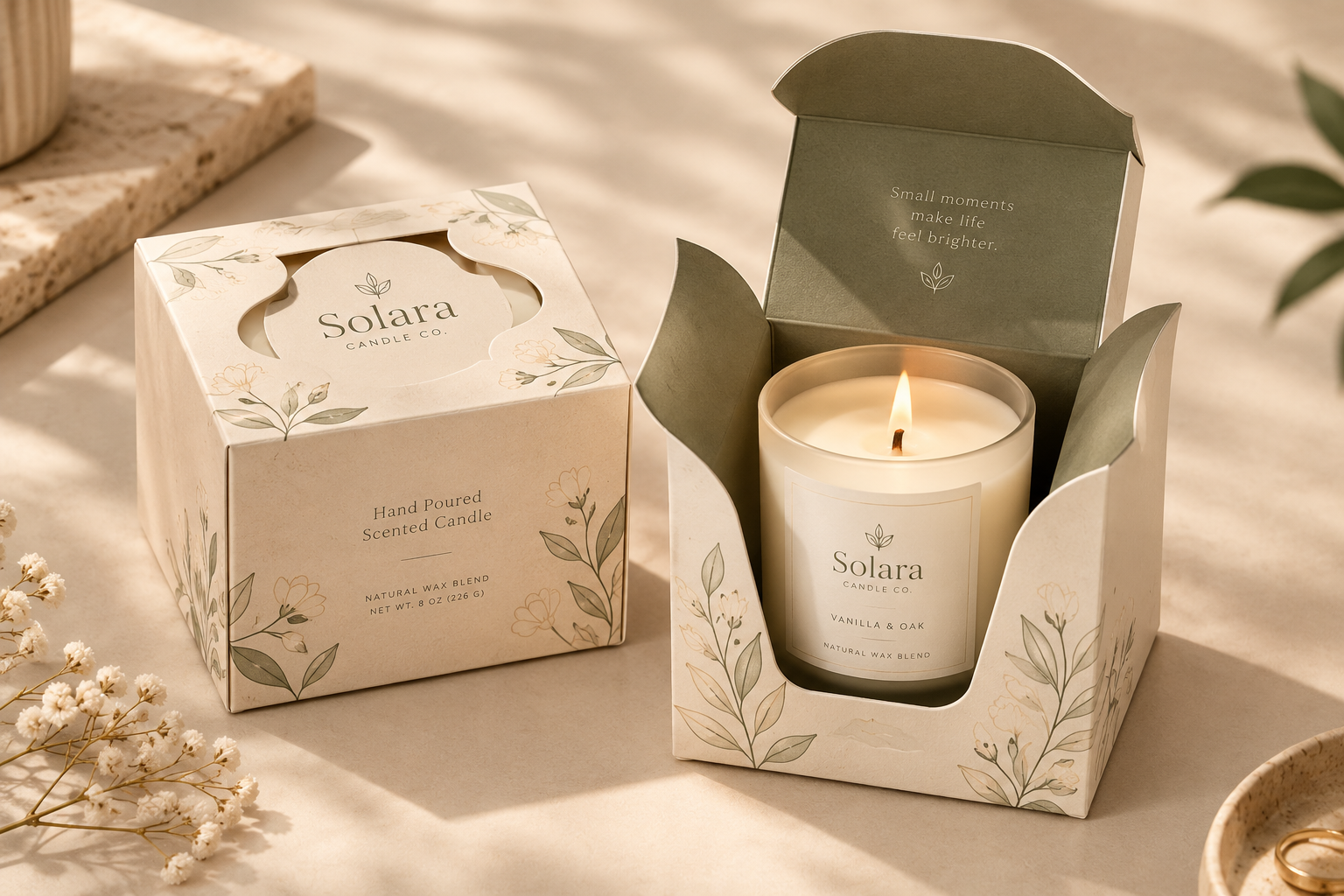
Giving Your Candles a Home Worth Opening
A candle is a sensory product, but customers meet it with their eyes and hands first. Before they smell the scent or watch the flame, they see the box. For makers selling at markets, online, or in boutiques, packaging is part of the product itself. It protects fragile glass, signals quality, and often decides whether a candle becomes a gift.
Why Candle Brands Compete on Presentation
Candles are crowded territory. Scents overlap, jars look similar, and shoppers have endless choices. That is why presentation carries so much weight. According to Fortune Business Insights, the global candle market was valued at USD 8.98 billion in 2025 and is forecast to reach USD 16.42 billion by 2034, growing at a 7.06% compound annual rate. More demand also means more competition, and packaging is one of the simplest ways to stand apart.
Many small makers begin with Custom Candle Boxes because a branded box can make a first-time product look established. A clean, confident design tells buyers you pay attention to the details.
Gift Buyers Decide Quickly
A large share of candles are bought as presents. Gift shoppers want something that looks ready to hand over, so a box that feels special saves them the effort of wrapping. Custom Candle Boxes with a tidy layout and a clear scent name on the front make that decision easier.
Protecting Glass, Wax, and Wicks
Candles are heavier and more fragile than they look. Glass cracks, lids scuff, and wax can crumble or smear if it shifts in transit. Good packaging has to handle all of that.
Fit and Cushioning
A box that is too loose invites movement, while one that is too tight can stress the jar. Aim for a snug fit with a little room for protective material. Paperboard inserts, corrugated sleeves, and molded pulp holders keep the candle upright and cushioned.
Shipping Considerations
Online orders face drops and temperature swings. Place the retail box inside a sturdier outer carton, and remember that wax can soften in heat.
Choosing a Structure That Fits Your Product
Not every candle needs the same box. A tall pillar, a squat tin, and a wide jar each call for different proportions. Think about how the product will be displayed as well. Tuck-end boxes suit compact items, while sleeves and lid-and-base styles work well for larger, giftable jars.
Die Cut Candle Boxes are a popular option when you want a window or a decorative opening that lets the candle peek through. A clean cut-out gives shoppers a glimpse of the color or label without removing the protection of the box. It also adds a small design detail that feels intentional rather than ordinary.
Designing for Scent You Cannot See
Customers cannot smell a closed box, so the design has to describe the scent for them. Use color, texture, and a few well-chosen words. Warm ambers and creamy tones suggest vanilla and spice. Cool greens and soft blues hint at herbs and clean air.
List the scent notes plainly on the front, and add burn time, wax type, and safety instructions on the back.
Branding That Grows With You
Consistency turns a small brand into a recognizable one. Pick two or three colors and a typeface, then repeat them across your boxes, labels, and stickers. When customers see your packaging again, they should recognize it before reading the name.
If your collection grows, create a simple system. Keep the same layout and change the color or pattern for each scent. Custom Candle Boxes designed this way look cohesive on a shelf and make it easy for repeat buyers to find their favorites.
Choosing Materials With Care
Paperboard is the most common choice for Custom Candle Boxes, and it prints beautifully. Rigid boxes feel more luxurious, which suits premium and gift lines. Kraft stock gives a natural, handmade look that pairs well with soy and botanical candles.
Many buyers care about the environment, so look for recycled content and water-based coatings. Be honest in your claims and state what can be recycled. Die Cut Candle Boxes made from recycled board can also keep your brand message consistent with a natural, small-batch style.
Ordering Tips That Save Time
- Order a sample and test it with your actual candle.
- Confirm color on a printed proof, not only on screen.
- Start with a smaller run to check fit and finish before reordering.
A short first run of Custom Candle Boxes lets you test the size, print, and customer reaction before committing to a large order. If the design proves popular, you can scale with confidence, and Custom Candle Boxes in larger volumes often come with better per-unit pricing. Once you have a winning design, a seasonal variation of Die Cut Candle Boxes can keep the range feeling fresh without a complete redesign.
Frequently Asked Questions
What size box do I need for my candle?
Measure the height and width of the finished candle, including the lid, then add a small allowance for inserts. A sample is the best way to confirm the fit.
Should I use a window on my candle box?
A small window can help buyers see the product, but it must not weaken the box. Keep the shape simple and test it before ordering a full batch.
How do I protect candles during shipping?
Use a snug retail box inside a sturdy outer carton, and fill any space with protective material. Avoid heat exposure in transit.
Final Thought
A great candle deserves packaging that protects it, describes it, and makes someone feel good about giving it. Choose a structure that fits, design with clarity, and keep your brand consistent. When you do, the box becomes the first moment of the experience, long before the match is lit.

 English