


Custom Healthcare Boxes for Medical Supplies and Accessories
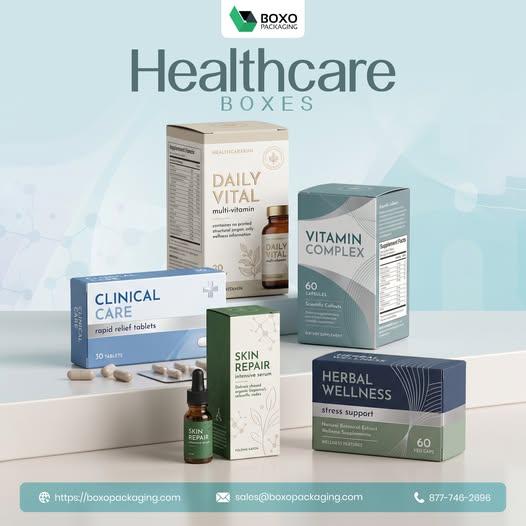
A purpose-designed carton can hold medical accessories, non-sterile supplies, test-related items, or components while providing a surface for clear identification. Custom Healthcare Boxes should be selected around the product dimensions, the number of components, and the protection required during storage and distribution.
Define the role of each packaging layer
A paperboard box may serve as an outer package, but it does not automatically provide sterility, moisture resistance, tamper evidence, or protection from light. Some products require sealed pouches, trays, or other primary packaging inside the carton. Identify the protective role of each layer before choosing board, inserts, or closures.
Design for clear identification
The carton may need product names, item codes, instructions, warnings, storage guidance, or batch details depending on the product. Use a clear information hierarchy and make the smallest text readable at final print size. Avoid placing critical details across folds or glue seams, and keep related products visually consistent without relying on color alone.
Use inserts to keep components in order
If a kit contains several accessories, an insert can prevent items from moving and make packing more consistent. Measure each component and leave enough space for removal without damaging the product or its inner packaging. The insert should not cover instructions or interfere with the carton closure.
Design checks before approval
Review the printed artwork and physical package together:
-
Confirm product identifiers, instructions, and required labeling elements.
-
Check barcode contrast and reserve clear space around machine-readable codes.
-
Verify the board, insert, and closure suit the packed weight.
-
Control approved artwork versions so outdated information is not printed.
Consider handling and storage
A carton may pass through a warehouse, clinic, or distribution center before reaching the user. Test whether the box can withstand expected handling and whether staff can identify and open it easily. Products with special temperature, sterility, or fragility requirements need a packaging system selected and evaluated for those conditions.
Arrange product-specific review
Labeling and packaging requirements depend on the healthcare product and the market. The responsible regulatory or quality team should approve the final specification and artwork. Boxo Packaging can discuss carton materials and printing options, but general guidance does not replace product-specific compliance checks.
Custom Carbonless Forms for Business and Service Records
Carbonless forms create duplicate or multi-part copies when pressure from writing transfers an image through specially coated sheets. Custom Carbonless Forms are used for invoices, delivery tickets, work orders, service reports, purchase orders, and other records where multiple people or departments need copies of the same information.
Choose the right number of copies
A two-part form may provide one customer copy and one office copy, while three or more parts can route information to additional teams. Each added sheet can affect writing pressure and readability. Decide who needs each copy before designing the set, and use clear labels or paper colors to distinguish the recipients.
Build fields around the workflow
Arrange fields in the order staff naturally collect information. A service form might include customer details, work performed, materials used, approval, and completion date. Leave enough space for realistic handwriting and longer notes. Checkboxes and section headings can improve scanning, but too many fields can make the form crowded.
Choose binding and handling details
Carbonless sets can be supplied as loose forms, glued pads, or perforated sets. Numbering can support record control, while a writing shield can help prevent pressure from marking the sheet beneath. Specify the sheet sequence, binding, perforation, and intended writing or printing method before production.
Details to confirm on the proof
Review the form as a working document, not just a page design:
-
Correct number of parts and the intended recipient for each copy.
-
Enough room for names, descriptions, quantities, signatures, and notes.
-
Perforation, padding, numbering, and binding that suit daily handling.
-
Readable terms, contact details, and required record fields.
Test legibility in actual use
Try the form with the pen or printing method staff will use. Very light pressure or an unsuitable sheet sequence can make later copies difficult to read. If forms will be used in workshops or outdoors, consider whether the paper and pad construction can withstand frequent handling. Collect only the personal information the workflow needs.
Keep versions consistent
A standardized layout helps staff find fields quickly across locations and teams. Retain flexibility for job-specific notes, but use a controlled master file to avoid outdated versions. When contact details, approval steps, or business processes change, review the form before reordering so the printed copies reflect the current workflow.

 English