


Digital Printing on Fabric: A Complete Guide
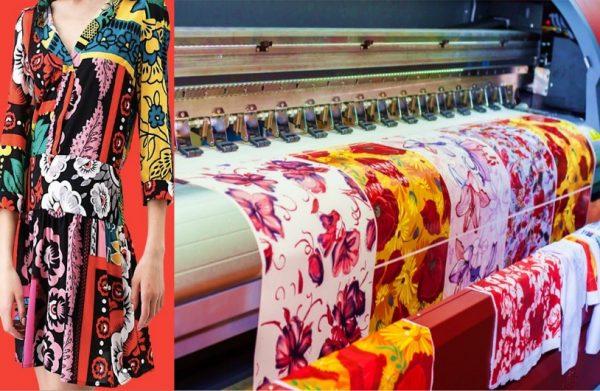
Digital printing on fabric is a modern textile printing method that uses inkjet technology to place designs directly onto fabric. Instead of preparing screens or engraved rollers for individual colors, the printer reads a digital artwork file and applies tiny droplets of textile ink to the material. This makes the process useful for detailed patterns, photographic designs, samples, customized products, and relatively short production runs.
The growing use of digital printing on fabric has changed the way textile businesses approach design and production. Designers can modify artwork on a computer, test different color combinations, and produce samples without preparing a complete conventional printing setup. The technology is used in clothing, home furnishings, sportswear, flags, displays, accessories, and decorative textiles. However, successful printing depends on selecting the right combination of fabric, ink, pretreatment, printer settings, and finishing method.
What Is Digital Printing on Fabric?
Digital textile printing is a direct-to-textile printing process. A specialized printer deposits ink onto a fabric according to instructions generated from a digital image. The technology works somewhat like an office inkjet printer, but textile machines are built to control fabric movement, ink deposition, drying, and other production conditions.
The choice of ink is important because different textile fibers have different chemical properties. Reactive inks are commonly used for cotton and other cellulose-based materials. Acid inks are suitable for materials such as silk, wool, and nylon. Disperse inks are primarily used with polyester, while pigment inks can be applied to a wider range of textile materials when the appropriate binder and curing process are used.
How Does Digital Printing on Fabric Work?
Design Preparation
The process starts with a digital design. This may be a repeating pattern, photograph, illustration, logo, or digitally created artwork.
The file should have appropriate resolution and dimensions for the finished product. Designers also need to check the repeat pattern if the artwork will cover a continuous length of fabric. Color management is another important consideration because the colors seen on a computer display may not appear exactly the same on a physical textile.
For commercial production, a sample or strike-off is often produced before the main order. This provides an opportunity to correct color, scale, or design problems.
Fabric Preparation
The fabric must be properly prepared before printing. Depending on the printing system, pretreatment may be required to control ink absorption and improve color development.
Fabric cleanliness and surface condition are also important. Dust, oil, moisture, wrinkles, or uneven tension can affect print quality. During production, the material must move through the printer smoothly to prevent distorted patterns or registration problems.
Ink Application
Once the fabric is prepared, it passes through the digital textile printer. Print heads deposit microscopic droplets of ink in carefully controlled positions.
The printer can vary droplet placement and ink volume to create different shades and levels of detail. This allows it to reproduce fine lines, gradients, textures, and complex images.
Digital printing is particularly effective for designs containing many colors because the artwork is processed electronically rather than requiring a separate physical screen for each color.
Fixation and Finishing
Printing is followed by fixation or curing, depending on the ink technology. The purpose is to ensure that the color becomes sufficiently attached to the textile.
Reactive dye printing commonly involves steaming followed by washing. Pigment printing generally uses heat to cure the binder. Polyester printing with disperse inks typically involves heat treatment or another process suited to the particular ink system.
Additional finishing may include washing, drying, softening, calendaring, or other treatments required for the intended product.
Types of Digital Textile Printing
Reactive Digital Printing
Reactive printing is widely used for cotton, viscose, and other cellulose fibers. The dye chemically reacts with suitable fiber groups during fixation, helping produce strong colors and good wash durability.
This method can be suitable for apparel, bedding, scarves, and other products where color performance is important.
Pigment Digital Printing
Pigment inks contain colored particles that remain on or near the fabric surface and are fixed with a binder. They can be used on a broad selection of fibers.
One practical advantage of pigment workflows is that they can reduce or eliminate some of the washing stages associated with dye-based printing. The final hand feel, color strength, and durability depend on the ink and curing system.
Acid Digital Printing
Acid inks are commonly used on silk, wool, and nylon. They can provide bright colors and detailed results when the fabric is properly prepared and the printed textile receives suitable fixation and washing.
Disperse Digital Printing
Disperse inks are mainly used for polyester. They are common in applications such as sportswear, flags, banners, exhibition graphics, and other synthetic textiles.
Key Benefits of Digital Printing on Fabric
Design Flexibility
A digital design can be changed without manufacturing a new screen or engraving another roller. This makes it easier to test multiple designs and respond to changing customer requirements.
High Detail
Digital textile printers can reproduce small design elements, smooth gradients, photographs, and intricate patterns. This is valuable for fashion and decorative products where visual detail is important.
Short-Run Production
Digital printing can be economically attractive for samples, limited collections, personalized products, and small orders because it does not require the same physical setup as many traditional processes.
Customization
Individual designs can be produced with relatively little change to the production workflow. Businesses can therefore offer customized names, graphics, patterns, or branding.
Efficient Sampling
A designer can move from digital artwork to a physical fabric sample without committing to a large production quantity. This helps identify problems before full-scale manufacturing.
Applications of Digital Fabric Printing
Fashion and Apparel
Digitally printed fabrics are used for dresses, shirts, scarves, skirts, sportswear, and fashion accessories. Designers can create patterns that would be difficult or expensive to reproduce using some traditional methods.
Home Furnishings
Curtains, cushions, bedding, table coverings, upholstery fabrics, and decorative textiles can be produced with digitally printed designs. Custom patterns are especially useful for interior projects.
Advertising and Events
Polyester fabric can be printed with logos, photographs, advertisements, event graphics, flags, exhibition backdrops, and display materials.
Creative and Custom Products
Small businesses and artists use digital textile printing for bags, quilts, wall art, fabric panels, craft products, and personalized merchandise.
Practical Benefits and Key Insights
Businesses should evaluate digital fabric printing as a complete production process rather than judging the printer alone.
The first step is to identify the fabric composition. Fiber type determines which ink technology is appropriate. A cotton fabric, for example, generally requires a different printing approach from polyester.
The intended use should also be defined. A frequently washed garment requires stronger wash performance than a decorative fabric intended primarily for indoor display.
Physical samples are valuable when color accuracy is important. Designers should evaluate the actual printed textile because fabric texture, absorbency, and finishing can influence the appearance.
Cost calculations should include more than the printer's operating cost. Ink, pretreatment, fabric, energy, labor, fixation, washing, drying, maintenance, and material waste can all affect the final cost per meter.
Common Challenges and Considerations
Color Management
Color consistency can be difficult when fabric batches, ink levels, printer settings, or finishing conditions change. Calibrated equipment and standardized workflows help reduce variation.
Fabric Compatibility
Not every ink works effectively on every fabric. Incorrect combinations can cause weak colors, poor adhesion, bleeding, or inadequate durability.
Print Durability
Durability depends on the ink chemistry, fabric, pretreatment, fixation, and finishing process. Products intended for frequent washing, outdoor exposure, or heavy use should undergo appropriate performance testing.
Production Volume
Digital printing offers strong flexibility, but it is not automatically the cheapest option for every order. Large-volume production of simple repeating patterns may sometimes favor conventional textile printing because setup costs are spread over a larger quantity.
Frequently Asked Questions
1. What is digital printing on fabric?
Digital printing on fabric is a direct textile printing process that uses specialized inkjet printers to apply digital artwork onto fabric using textile-compatible inks.
2. Which fabrics are suitable for digital printing?
Cotton, polyester, silk, wool, nylon, viscose, and blended textiles can be digitally printed. The appropriate ink and pretreatment depend on the material's fiber composition.
3. Does digital fabric printing produce durable results?
Yes. When the correct ink, pretreatment, fixation, and finishing methods are used, digital prints can provide good resistance to washing, rubbing, and other forms of use. Performance varies by technology and application.
4. Is digital printing better than screen printing?
The choice depends on the project. Digital printing is well suited to detailed designs, customization, sampling, and short runs. Screen printing may be more economical for some large-volume orders.
5. Can a photograph be digitally printed on fabric?
Yes. Digital textile printers can reproduce photographs, illustrations, and detailed artwork. The source image should have adequate resolution, and the fabric and ink system must be suitable for the intended application.
Conclusion
Digital printing on fabric provides textile designers and manufacturers with a flexible way to turn digital artwork into finished printed materials. Its ability to handle detailed graphics, multiple colors, customization, sampling, and shorter production runs makes it useful across fashion, home textiles, advertising, sportswear, and creative products.
The quality of a digitally printed textile depends on the complete production workflow. Fabric selection, ink chemistry, pretreatment, artwork preparation, color management, printing conditions, fixation, and finishing all influence the final result. Businesses that evaluate these factors carefully can achieve consistent and durable prints while using the flexibility of digital technology to respond to modern textile demands.

 English