A customer support CV can say you’re patient, reliable and good with people. So can almost every other CV on the hiring manager’s desk. The harder job is showing what those qualities actually look like when a customer is angry, confused or waiting for an answer.
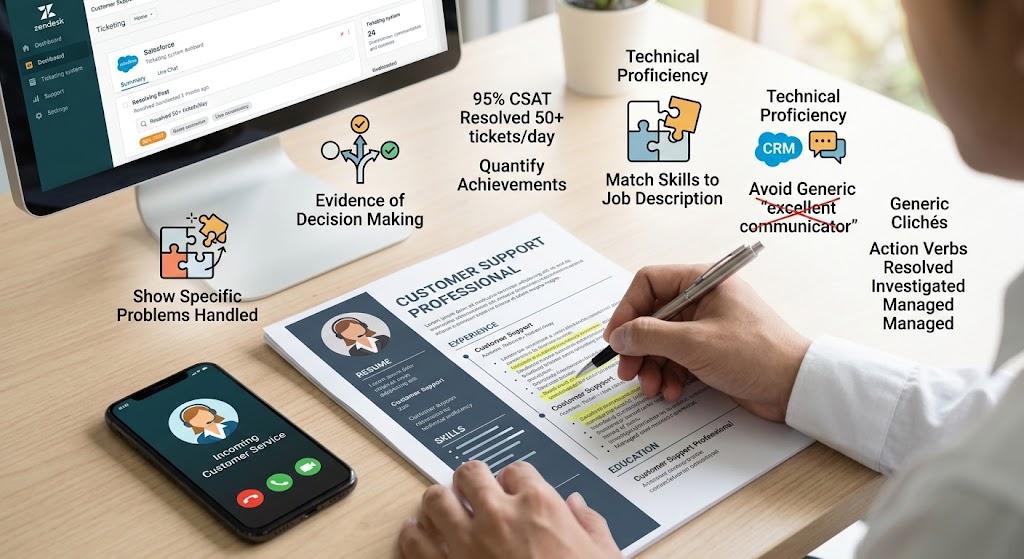
That means your CV needs to go beyond listing customer service duties. It should give a clear picture of the problems you handled, the decisions you made and the responsibility you carried.
Start With What You Actually Did for Customers
“Customer service experience” is too broad to tell an employer much on its own. Support roles can involve very different types of work, from answering routine enquiries to troubleshooting technical problems, managing accounts or handling serious complaints.
Look at your previous roles and identify the work behind the job title.
You might have:
- Handled enquiries by phone, email, live chat or in person
- Investigated order, billing or account problems
- Managed complaints and escalated difficult cases
- Explained complicated information in straightforward language
- Recorded customer interactions and updated case notes
- Worked with other departments to resolve problems
- Managed several enquiries while working to response targets
These details give an employer something much more useful than “provided excellent customer service”. They show the nature of your experience and the level of responsibility you had.
Why Generic Customer Service Phrases Don't Help Much
The biggest weakness in many support CVs isn't poor experience. It's vague writing.
Phrases such as “excellent communication skills”, “worked well under pressure” and “provided outstanding customer service” are easy to write because they require no evidence. The problem is that they could apply to almost anyone.
Compare:
Provided excellent customer service and resolved customer queries.
with a description that explains the work itself: handling account enquiries by phone and email, checking customer records, clarifying the problem and escalating cases that required specialist support.
The second version shows how you worked. It gives the employer clues about your communication, judgement, systems knowledge and ability to take ownership.
That is the standard worth aiming for throughout the CV.
Match Your Evidence to the Role You're Applying For
Not every customer-facing job needs the same version of your experience.
A customer success position may place more emphasis on account relationships, customer retention and ongoing communication. A call-centre role could focus heavily on handling enquiry volumes, complaint resolution and following defined processes. Technical support may require evidence of troubleshooting, product knowledge and escalation.
Read the vacancy carefully and identify what the employer actually needs.
If the advert repeatedly mentions complaint handling, don't bury your experience with difficult customers beneath five bullets about routine administration. If it asks for CRM experience, make the systems you've genuinely used easy to find.
This doesn't mean copying phrases from the job advert. It means deciding which parts of your own experience deserve the most space.
Even people comparing CVs with help from a top customer support CV writing service are ultimately judged on whether the document presents relevant, credible evidence. Polished wording cannot compensate for a lack of substance.
Turn Routine Duties Into Evidence
Customer support work can feel ordinary when you're describing it from inside the job. Handling another account query or calming another frustrated caller may not feel like an achievement.
But those situations can reveal useful skills if you explain them properly.
Work through your previous roles and ask:
- What problems did customers usually contact me about?
- Which issues could I resolve without supervision?
- What types of complaints or escalations did I handle?
- Which communication channels did I use?
- What systems did I use to record or manage customer interactions?
- Did I manage accounts, orders, bookings or cases?
- Did I spot recurring problems or suggest improvements?
- What happened after I dealt with a difficult case?
Numbers can strengthen a bullet when they're genuine. You might have handled a particular volume of enquiries, managed a customer portfolio or worked against response targets. But don't manufacture figures simply because CV advice tells you to “quantify everything”.
A detailed description of a responsibility can be stronger than an arbitrary number.
Don't Ignore the Technical Side of Customer Support
Customer service isn't just about having a pleasant manner.
Many support roles depend on accurate records, internal systems, procedures and knowing when an issue needs to be passed elsewhere. Your CV should reflect that operational side of the job.
Mention relevant software you have actually used, such as CRM platforms, ticketing systems, knowledge bases, live-chat tools or internal communication systems. If the role involved maintaining customer records, processing orders or documenting cases, say so.
This matters particularly for applicants moving between industries. A person might not have used the employer's exact platform, but experience with a comparable system can still demonstrate that they understand how customer information is managed.
The same applies to transferable skills. Retail workers may have handled complaints and busy periods. Receptionists may have managed competing enquiries and sensitive information. Sales staff may already understand account relationships. Administrators may have extensive experience dealing with customers and resolving problems.
Your job title doesn't always tell the full story.
Avoid These Common CV Mistakes
One common mistake is making the document sound like a personality profile. Customer support does require empathy and patience, but repeatedly calling yourself “friendly”, “positive” or “enthusiastic” doesn't demonstrate those qualities.
Another is describing only the customer-facing part of the job. Support employees also have to follow procedures, maintain accurate information, meet deadlines and communicate internally. Leaving those responsibilities out can make your experience look less substantial than it really is.
Be careful with exaggerated claims, too. Calling yourself an “expert problem solver” is less convincing than describing a situation where you investigated a problem, found the relevant information and reached an appropriate resolution.
Presentation matters as well. A crowded CV, inconsistent formatting or enormous blocks of text can make strong evidence surprisingly difficult to find. Clear headings and concise bullet points give the reader a better route through your experience.
Test Your CV From the Employer's Side
Once you've finished the first draft, stop reading it as the person who lived through those jobs.
Read it as someone meeting you for the first time.
After each recent position, can you tell:
- Who the customers were?
- What kinds of problems you handled?
- Which channels you used?
- How independently you worked?
- What systems you used?
- When you had to escalate an issue?
- What results or outcomes came from your work?
Then compare that picture with the vacancy.
You don't need a completely different CV for every customer-facing role, but you should adjust the emphasis. Your strongest evidence should relate to the work you're actually applying to do.
The Best Customer Support CVs Show How You Work
A strong customer support CV doesn't need a collection of spectacular achievements. Some of the best evidence comes from routine situations handled properly: calming an unhappy customer, finding an answer that wasn't immediately obvious, keeping accurate records or recognising that a problem needed specialist attention.
The difference is in the description.
Instead of telling an employer that you're good with customers, give them enough evidence to reach that conclusion themselves. Show the problems you handled, the decisions you made, the systems you used and the responsibility you carried.
A hiring manager should finish your CV with a reasonably clear idea of what happens when a real customer puts a real problem in front of you. That's far more persuasive than a page full of adjectives.




 Turkish